Fine Print, Real Consequences: The Legal Gaps Leaving Adult Performers Exposed in 2024
There's a conversation happening at the edges of the adult entertainment industry — in legal offices, in performer advocacy groups, in DMs between creators comparing notes on sketchy contracts — and it's one that rarely makes it into the mainstream. It's about consent. Not the on-camera kind that gets all the attention, but the legal, contractual, and systemic kind that determines what happens to a performer's body, image, and livelihood long after the cameras stop rolling.
In 2024, that conversation is more urgent than it's ever been.
What the Contracts Actually Say (And What They Don't)
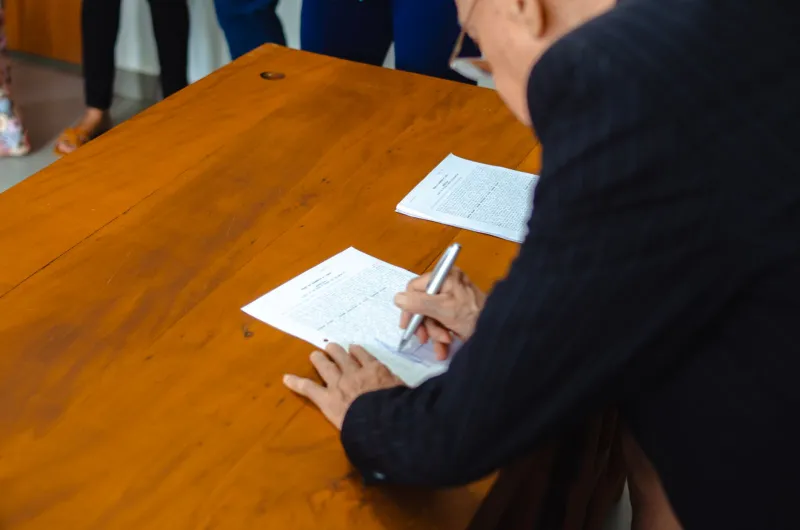
Most people outside the industry assume that adult performers are covered by some kind of robust legal framework. The reality is considerably messier. Contracts in the adult space vary wildly — from straightforward, professionally drafted agreements at established studios to one-page documents that wouldn't hold up in a serious dispute. And it's often newer or independent performers who end up on the wrong end of that spectrum.
Attorneys who work with adult performers say the most common problem isn't outright fraud — it's ambiguity. Language around content usage rights, distribution territories, and perpetual licensing is frequently buried in dense legalese that performers sign without fully understanding. One clause that keeps coming up? Broad image rights grants that allow producers to license a performer's likeness for uses that weren't discussed or agreed to verbally.
"A lot of performers think they're signing something for one video, one platform," says one entertainment attorney who works with creators across the adult industry. "What they're actually signing, in many cases, is a document that gives the producer enormous latitude over how that content gets used — potentially forever."
That's not a hypothetical concern. It's a documented pattern.
The AI Problem Is Making Everything Worse
If traditional contractual ambiguity was already a serious issue, the rise of AI-generated content has turned it into a crisis. Deepfake technology and AI voice cloning have made it possible to create convincing simulations of a performer's likeness without their knowledge or involvement. And in many states, the legal tools to fight back are either nonexistent or untested.
Some states have begun moving on this. Tennessee passed the ELVIS Act earlier this year, targeting AI voice cloning — a law that has implications well beyond the music industry it was named for. California has also been active on the deepfake front, with legislation specifically targeting nonconsensual intimate imagery. But federal-level protections remain inconsistent, and enforcement is lagging far behind the technology.
For adult performers, the stakes are especially high. Their professional identities are tied to their physical likeness in ways that most workers' aren't. An AI-generated video using someone's face without permission doesn't just feel like a violation — it can tank their reputation, confuse their fanbase, and in some cases, be used to manufacture scenarios they never agreed to perform.
Advocates are pushing for explicit AI consent clauses to become standard in performer contracts, but adoption across the industry has been slow and uneven.
Consent Beyond the Scene: What It Actually Means
The adult industry has made genuine progress on on-set consent practices over the past decade. Organizations like the Free Speech Coalition have pushed for clearer standards, and many established producers take pre-scene negotiations seriously. But consent isn't a single moment — it's an ongoing process that extends far beyond what happens in front of a camera.
That includes consent around:
- Content redistribution: Does the performer know where their content will be hosted, sold, or licensed?
- Promotional use: Can their image be used in marketing they haven't approved?
- Content alteration: Can the footage be edited, dubbed, or modified after the fact?
- Removal rights: Under what circumstances can a performer request content be taken down?
This last point has become a flashpoint in recent years. Some performers who have left the industry — or who want specific content removed for personal or safety reasons — find themselves with little legal recourse. The Digital Millennium Copyright Act offers some pathways, but they're slow, inconsistent, and often require performers to prove ownership of content in situations where contracts muddied those waters from the start.
What Stronger Protection Actually Looks Like
Industry advocates aren't just identifying problems — they're pushing specific solutions. The ask, broadly speaking, comes down to a few key areas.
Standardized contract language. Right now, every contract is its own document. Advocates want to see industry-wide adoption of baseline clauses that clearly define usage rights, consent scope, and removal procedures in plain English.
Mandatory legal review periods. Performers shouldn't be handed a contract and expected to sign it on the spot. A required review window — with the right to consult an attorney — would shift the power dynamic meaningfully.
AI-specific consent provisions. Any contract signed in 2024 should explicitly address whether a performer's likeness can be used in AI-generated content, under what circumstances, and with what compensation.
Stronger state-level protections. Federal law isn't moving fast enough. Advocates are focusing energy on state legislatures, pushing for laws that give performers enforceable rights around content removal, likeness protection, and nonconsensual distribution.
Performer-led advocacy infrastructure. This is less about legislation and more about industry culture. Performers having access to legal resources, peer networks, and advocacy organizations changes what's possible. Groups doing this work exist — but they're underfunded relative to the scale of the industry.
Why This Matters for Everyone Watching
It's easy to frame performer rights as an industry-internal issue — something for studios, agents, and lawyers to sort out. But audiences have a stake in this too, even if it's less obvious.
When performers operate in legal environments that don't protect them, the content that gets made reflects that. Coercion, even when it's subtle or structural, shows up on screen in ways that are hard to articulate but easy to feel. The push for stronger performer protections isn't just about fairness — it's about the integrity of what the industry produces.
There's also a more direct consumer angle: platforms that don't vet their content for consent compliance are platforms that may be hosting material that shouldn't exist. For viewers who care about what they're watching — and more of them do than the industry sometimes assumes — performer protections are directly relevant to the choices they make about where they spend their money.
The Bottom Line
The adult industry has always operated in the margins of legal and cultural respectability, and that outsider status has sometimes been used to justify the absence of the protections that workers in other industries take for granted. That argument is wearing thin.
Performers in 2024 are sophisticated professionals — many of them running their own businesses, managing their own brands, and navigating a complex digital landscape with limited institutional support. The legal infrastructure around them needs to catch up.
The consent conversation is happening. It just needs to get a lot louder.