Your VPN Isn't the Shield You Think It Is: The Hard Truth About Adult Streaming Privacy
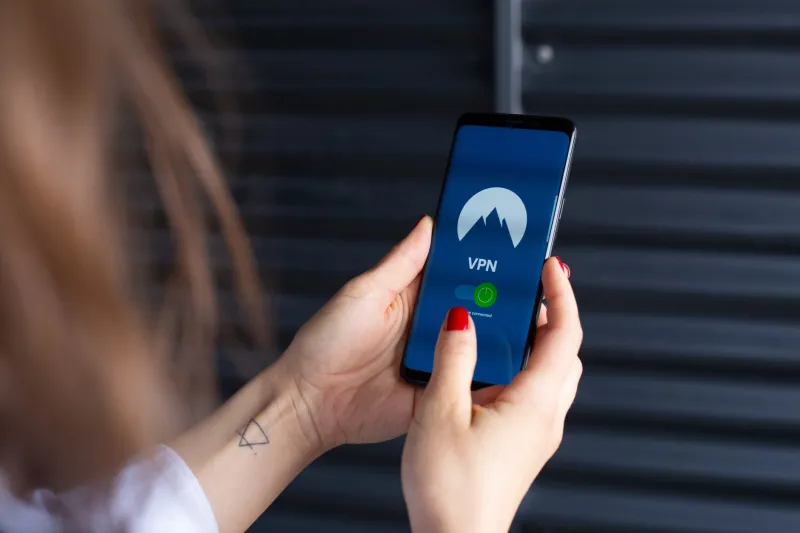
Let's be real for a second. A huge chunk of US adult content viewers have the same pre-streaming ritual: open VPN app, connect to some server in the Netherlands, feel invincible, then go about their business. It's become almost reflexive — like clearing your browser history even though you live alone. The problem is, that ritual is built on a foundation of assumptions that don't hold up nearly as well as the internet would have you believe.
We're not here to scare you off the internet or turn this into a cybersecurity lecture. But if you're consuming adult content in 2024 and you think a VPN is a magic cloak of invisibility, there are some things worth understanding.
What a VPN Actually Does (And Doesn't Do)
A Virtual Private Network does exactly what the name implies — it creates a private tunnel between your device and a server somewhere else, masking your IP address and encrypting the data traveling between the two points. For casual privacy purposes, that's genuinely useful. Your ISP can't see the specific URLs you're visiting, and websites you visit see the VPN server's IP instead of yours.
So far, so good. But here's where people start building castles on sand.
A VPN does not make you anonymous. It shifts who can see your traffic, not whether your traffic can be seen at all. Your VPN provider has full visibility into everything you do while connected. Free VPN services, in particular, have a documented history of logging user activity and, in some cases, selling that data or cooperating with legal requests. Even paid services vary wildly in how seriously they take their own no-logs policies.
And if you're in the US, the legal landscape matters here. American VPN providers operate under US jurisdiction, which means they can be compelled to hand over records under certain circumstances. Several high-profile cases over the past few years have shown that "no-logs" is sometimes more of a marketing phrase than an operational reality.
How ISPs Are Getting Smarter
Even with a VPN running, your internet service provider can still detect that you're using one. Deep packet inspection — a method ISPs have been refining for years — can identify VPN traffic patterns even when the content itself is encrypted. What they can't always see is exactly what you're doing inside that tunnel, but they absolutely know the tunnel exists.
More relevant to adult content viewers: some ISPs in the US have been quietly implementing their own content filtering systems, partly in response to state-level legislation pushing for age verification and content restriction. Several states have passed or are actively considering laws requiring ISPs to block certain categories of adult content by default. When those systems are in play, a VPN connection to a foreign server can actually flag your traffic as suspicious rather than hide it.
There's also the device layer to think about. Your phone, laptop, and smart TV are constantly broadcasting information about themselves. Browser fingerprinting — a technique that identifies your device based on its unique combination of settings, fonts, plugins, and screen size — works completely independently of your IP address. A site can fingerprint your browser whether you're on a VPN or not.
The Legal Gray Areas Nobody Talks About
Here's the part that gets genuinely murky. In the US, simply watching adult content on a legal platform is, of course, legal. But the patchwork of state-level age verification laws, obscenity statutes that vary by jurisdiction, and evolving regulations around certain content categories means the legal picture isn't uniformly clean across all 50 states.
Using a VPN to access content that's been geo-blocked in your state — say, a platform that's pulled out of Louisiana or Texas rather than comply with age verification laws — occupies a genuine gray area. You're not necessarily committing a crime, but you're also not in the clear zone that most VPN marketing implies. Terms of service violations on the platform side are also on the table, and those can have real consequences including account termination and forfeiture of paid subscriptions.
The other thing worth knowing: if you ever do end up in a situation where your viewing habits become legally relevant (think: a contentious divorce, a custody dispute, a workplace investigation), a VPN history doesn't erase the digital trail as thoroughly as people assume. Metadata — connection times, data volumes, session durations — often survives even when content logs don't.
What Actually Works for Better Privacy
None of this means VPNs are useless. They're a solid first layer of protection, and for most everyday adult streaming situations, they do reduce your exposure meaningfully. The key is understanding them as one tool among several, not a complete solution.
If privacy genuinely matters to you, stack your protections. Use a reputable, paid VPN with an independently audited no-logs policy — Mullvad and ProtonVPN have strong reputations in this regard. Combine that with a privacy-focused browser like Firefox with uBlock Origin, and consider using a separate browser profile exclusively for adult content consumption. That separation alone does a lot of work.
For the most sensitive use cases, the Tor network provides significantly stronger anonymity than any commercial VPN, though it comes with real speed tradeoffs that make streaming a painful experience. It's a tool, not a daily driver for video content.
Pay attention to which platforms you're using and where they're based. Platforms operating under GDPR in Europe are legally required to handle your data with more care than many US-based services. It's not a guarantee, but it's a meaningful structural difference.
The Bottom Line
The VPN myth persists because it's comforting and because, most of the time, nothing bad happens. For the average US viewer on a mainstream adult platform, the practical risk of being "caught" in any meaningful sense is pretty low. But low risk isn't no risk, and the specific risks that do exist are different from what most people imagine.
Know what you're actually protected against, know what you're not, and make decisions accordingly. The internet was never as private as we wanted it to be — but it doesn't have to be as exposed as it currently is, either.