Watching in Secret: The Privacy Gap Adult Streaming Platforms Keep Ignoring
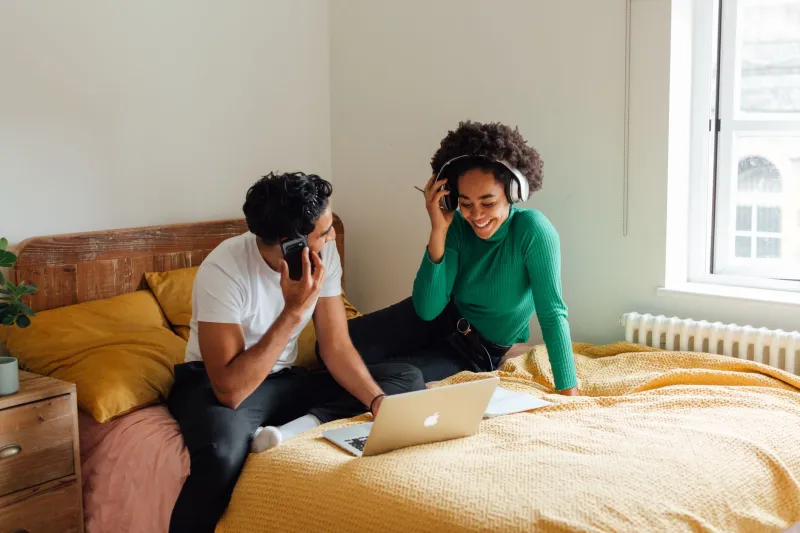
Let's be real about something most platforms would rather not discuss: a massive chunk of their user base isn't watching from a private bedroom with a locked door and blackout curtains. They're on shared Wi-Fi in a college dorm. They're on a family plan laptop in the living room. They're in a two-bedroom apartment with a roommate who has zero boundaries and a habit of walking in unannounced.
And yet, if you look at the privacy features most adult streaming platforms offer in 2024, you'd think every single user lives alone in a soundproofed studio with their own dedicated internet connection. The gap between how people actually live and what these platforms actually build is, frankly, absurd.
The Reality of Shared Living in America
About 79 million Americans live in shared households, according to recent census data. That includes everyone from college students crammed into residence halls to adults doubling up on rent because cities have become financially brutal. For a huge portion of that group, consuming adult content privately isn't just a preference—it's a logistical puzzle with real social stakes.
Getting caught watching adult content by a roommate is awkward. Getting caught by a parent or a younger sibling is mortifying. Getting caught because a platform sent a notification to a shared device, or because your browser history synced across a family Apple ID, or because your credit card statement reads something unmistakably explicit? That's a different level of problem entirely.
These aren't edge cases. These are everyday situations that millions of users navigate, often with workarounds so janky they'd make a UX designer cry.
What Platforms Currently Offer (It's Not Much)
Most adult streaming platforms do offer some version of privacy features. Incognito or private browsing modes are common. A few have introduced PIN-protected profiles. Some offer billing descriptors that don't scream what they are—though this is inconsistent and often requires users to know to look for the option in the first place.
But here's the thing: these features exist as afterthoughts, not architecture. They're bolted on rather than built in. And the result is a patchwork of half-measures that fail users in predictable, frustrating ways.
Take incognito modes. On most platforms, enabling private browsing clears your watch history locally—but does nothing about server-side data, account-linked activity, or cross-device syncing. Your "private" session might not show up in your on-platform history, but it still fed data into an algorithm and possibly synced to a connected email. Users who think they're protected often aren't.
Then there's the notification problem. Several major platforms send email recaps, promotional offers, and content alerts to whatever address is on file. If that email is shared, accessible to a family member, or displayed on a shared device, the whole privacy structure collapses. It's a single point of failure that platforms have been slow to address.
Talking to the People Who Design This Stuff
We spoke with a few UX designers—some currently working in adjacent industries, others who've done contract work for adult platforms—about why privacy features remain so underdeveloped. The answers were illuminating and a little depressing.
"There's this assumption baked into product roadmaps that the user is always in a private context," one designer told us. "It's the default mental model. And when you challenge it, the pushback is usually about prioritization. Privacy features don't drive new sign-ups. They don't show up in conversion metrics. So they keep getting deprioritized."
Another designer pointed to a cultural reluctance to acknowledge the problem publicly. "If a platform starts loudly advertising 'hey, we're great for people hiding this from their families,' there's a perception risk. It sounds like you're enabling something shameful. Even if that's not the intent, nobody wants that headline."
The irony is thick. Platforms are reluctant to build privacy tools specifically because acknowledging the need for them feels stigmatizing—but the stigma is exactly what makes the privacy tools necessary in the first place.
What Actually Good Privacy Would Look Like
Some platforms are beginning to move in better directions, even if slowly. Here's what designers and advocates in this space say would actually make a difference:
Discrete billing as a default, not an opt-in. Right now, users often have to hunt through settings to find a billing descriptor option. Flipping this so that vague or neutral descriptors are the default—and explicit ones require opting in—would protect a lot of people who don't know the option exists.
Notification controls that are actually granular. Not just "turn off emails" but specific controls over what gets sent, when, and to what address. The ability to route account communications to a separate, dedicated email should be prominently offered during signup.
Session-based browsing that's genuinely isolated. Not just clearing local history, but offering a mode where activity doesn't feed into account-level data, recommendations, or cross-device syncing. A true guest mode within your own account.
PIN or biometric locks at the app level. Some platforms have this; most don't. On shared devices, a simple lock screen that requires authentication before the app opens would eliminate a category of accidental exposure entirely.
Auto-close and timeout features. If a session goes idle, the app should lock or close, not sit open on the last thing you were watching. This is table-stakes stuff that somehow still isn't universal.
The Audience Waiting to Be Served
Here's the business case that platforms keep missing: the users who most desperately need better privacy tools are also users with real loyalty to offer. If you're someone navigating a complicated living situation, and one platform makes that navigation genuinely easier while another one keeps fumbling it, you're not splitting your subscription dollars. You're going all-in on the one that actually gets it.
Privacy features aren't a liability to be managed. They're a product differentiator that's sitting unclaimed. The platform that figures this out first—that builds privacy into the experience from the ground up rather than tacking it on as an afterthought—is going to earn a level of user trust that's genuinely hard to replicate.
Until then, a lot of people are going to keep doing what they've always done: watching with one ear toward the door, browser history set to auto-delete, and a low-grade anxiety that the platform they're paying for is one notification away from making their life complicated.
That's not a great user experience. And in 2024, it doesn't have to be.