The Hidden Cost of Always Being On: Burnout Is Breaking Adult Creators
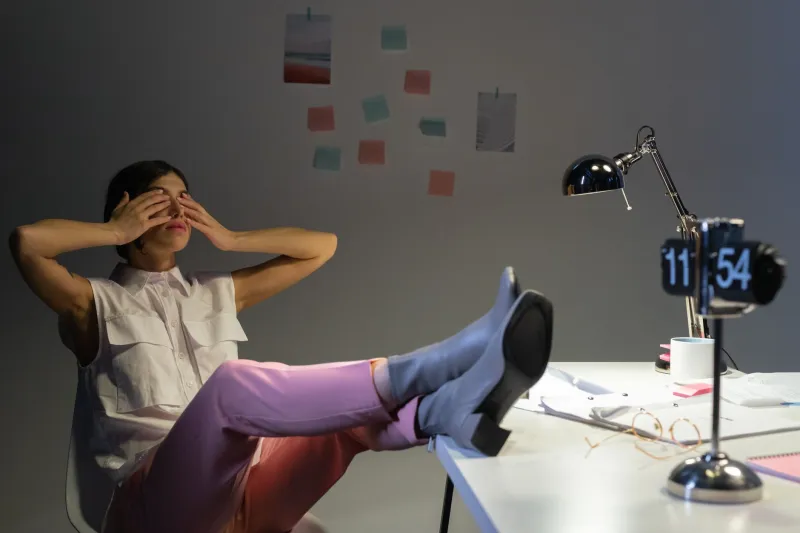
There's a version of the adult creator story that gets told a lot: someone takes control of their own image, builds an audience, earns real money on their own terms. And that story is true — for a lot of people, entering the adult creator economy genuinely is empowering and financially transformative.
But there's another version that doesn't get told nearly as often. The one where a creator is posting through anxiety attacks because they can't afford to go dark for a week. Where they're managing a public persona, a private identity, and a customer service inbox simultaneously at midnight. Where the thing that started as creative freedom slowly starts feeling like a trap with a very attractive thumbnail.
Burnout in the adult creator economy is real, it's widespread, and it's almost entirely invisible to the outside world.
The Pressure Cooker Nobody Warns You About
Most people who start creating adult content don't come with a roadmap. The learning curve isn't just technical — it's psychological. You're figuring out how to perform intimacy for an audience while also running a small business, managing your own marketing, handling customer interactions, and protecting your identity from people who might want to harm you with it.
That's a lot. And most of it happens simultaneously, all the time.
"I didn't realize how much mental energy goes into just maintaining the persona," says one creator who's been producing content for about three years and asked to remain anonymous. "It's not just the filming. It's the constant mental math of what to share, what to hide, how to respond to this message, whether this subscriber is safe. You're always performing even when you're not on camera."
The subscription model, which has become dominant in adult content, adds a specific layer of pressure. Unlike a one-time sale, subscriptions create an ongoing obligation. Subscribers expect regular content. Algorithms on creator platforms reward consistent posting. Miss a week and you might see churn. Miss two weeks and you're watching your income drop in real time. The financial structure of the business actively punishes rest.
Privacy Anxiety Is Its Own Full-Time Job
For adult creators in the US, privacy isn't just a preference — it's a survival necessity. The fear of being identified by family, employers, or people from their offline lives is a constant background hum for most creators who work under a pseudonym. And that fear doesn't clock out.
Creators describe elaborate mental systems for keeping their two lives separate: different devices, different email addresses, different social circles, different vocal patterns on camera. Some avoid certain topics entirely in their content because a stray detail — a recognizable landmark, a distinctive piece of furniture, a reference to a local sports team — could be enough for someone determined to identify them.
The cognitive load of maintaining that separation is significant. Psychologists who work with people in high-concealment professions — which adult creators effectively are — note that the constant vigilance required to keep a secret identity takes real mental energy, energy that isn't available for anything else.
And when privacy fails — when content gets leaked, when someone outs a creator to their family, when a stalker figures out a real name — the psychological fallout can be severe. These aren't hypothetical risks. They happen regularly, and the support systems available to most people in crisis (HR departments, employee assistance programs, professional networks) simply don't exist for independent adult creators.
Stigma Makes Everything Harder
One of the most insidious aspects of burnout in this industry is that it's nearly impossible to talk about openly. Most adult creators can't discuss their work stress with family or friends who don't know what they do. They can't call in sick to a boss who understands the context. They can't post on LinkedIn about career challenges or join a professional network for support.
When they do seek help — therapy, medical care, crisis support — they often run into providers who are unprepared for or uncomfortable with their profession. Several creators described experiences where therapists responded to disclosures about their work with visible discomfort, judgment, or unhelpful advice that assumed the work itself was the problem rather than the conditions around it.
"I've had therapists who clearly just wanted to talk me out of doing it," one creator told us. "That's not support. That's stigma wearing a clinical face."
Sex worker-affirming therapists exist, but finding one in your area, with availability, who accepts your insurance (if you have it), is genuinely difficult. Most adult creators are independent contractors with no employer-provided mental health benefits. They're paying out of pocket for therapy in an environment where out-of-pocket therapy costs have gotten brutal.
What Sustainable Actually Looks Like
Creators who've built long-term careers in adult content — and there are more than you might think — tend to share a few common practices that seem to help.
Boundaries around content production are near-universal among the people who've lasted. That might mean hard limits on posting frequency, specific days designated as off-camera, or clear rules about what types of requests they'll engage with. "No" as a complete sentence, applied consistently, seems to be a prerequisite for longevity in this space.
Diversifying income is another common thread. Creators who rely entirely on one platform or one revenue stream are more vulnerable to the anxiety spikes that come with subscriber fluctuations, platform policy changes, or algorithm shifts. Building multiple income streams — subscriptions, custom content, merchandise, affiliate partnerships — creates a financial buffer that takes some of the existential pressure off any single bad week.
Community matters enormously. Creators who are connected to networks of other adult content makers — even informally, through private group chats or creator forums — consistently report better mental health outcomes than those who work in isolation. Peer support from people who actually understand the specific stressors of the job is irreplaceable, and it's something the industry needs a lot more of at a structural level.
An Industry That Needs to Do Better
The honest assessment is that the adult creator economy has gotten pretty good at celebrating creator success stories and pretty bad at supporting creators through the hard parts. Platforms profit significantly from creator labor without investing meaningfully in creator wellbeing. The infrastructure for mental health support, professional development, and crisis intervention that exists in traditional entertainment industries is almost entirely absent here.
That's starting to change, slowly. A handful of organizations focused on sex worker health and rights have expanded their mental health resources. Some creator platforms have begun offering wellness resources, though the depth and quality vary widely. Creator communities themselves are increasingly open about burnout as a shared experience rather than a personal failure.
But there's a long way to go. The adult creator economy generates billions of dollars annually in the US. The people producing that content deserve support systems that match the scale of their contribution — not just when the content is good, but when the creators need a break.