Raw Beats Refined: How 'Real' Adult Content Took Over and What It Means for Everyone Making It
There's a certain kind of adult video that looks expensive. Professional lighting. Edited to a polish. Performers who look like performers. For decades, that was the benchmark — the thing the industry pointed to as quality.
That benchmark is crumbling, and it's not coming back.
Across subscription platforms, clip sites, and fan communities, audiences are consistently choosing content that feels unscripted, unpolished, and unmistakably human over productions that look like they cost real money to make. The shift isn't subtle anymore. It's reshaping how creators approach their work, how platforms think about promotion, and where the actual money flows in 2024.
What 'Authentic' Actually Means Here
Let's be clear about what we're talking about, because "authentic" can mean a lot of things.
In this context, it doesn't necessarily mean no editing, no planning, or no production awareness. It means content where the creator's actual personality comes through. Where the chemistry feels unforced. Where the scenario isn't so scripted that it loses all sense of spontaneity. Where the viewer believes — or at least can convincingly suspend disbelief — that what they're watching is a real moment rather than a performance.
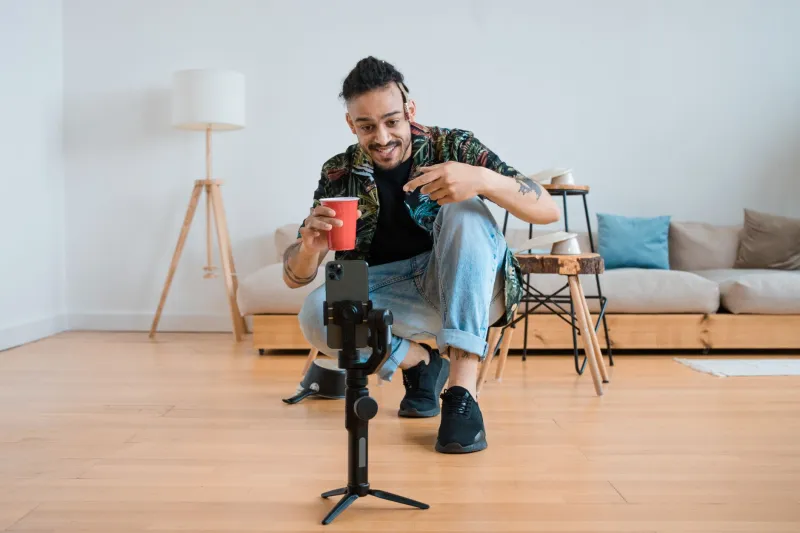
The production value question is almost secondary. Some creators make genuinely polished content that still reads as authentic because their personality is present throughout. Others film on a phone in natural light and it works because everything about them feels real. The through-line is connection, not equipment.
This distinction matters for creators trying to figure out what to actually do with this trend.
Why Audiences Shifted — and When
The move toward authenticity in adult content didn't happen overnight, and it didn't happen in a vacuum.
The rise of platforms like OnlyFans starting around 2019-2020 fundamentally changed the relationship between creator and consumer. For the first time at real scale, fans could have direct access to the people making content. They could message them. They could request things. They could follow someone's life outside of the videos.
That access created intimacy, and intimacy created a new set of expectations. Once you've had a conversation with a creator — even a transactional one — watching them perform in a highly scripted studio production feels weirdly disconnected. The parasocial relationship viewers had built with the person didn't match the product the performer was delivering.
Creators who figured this out early leaned into it hard. They started sharing more of themselves — their sense of humor, their off-days, their actual personalities. The content got less formal. And subscribers responded by paying more, staying longer, and telling their friends.
The Earnings Reality
Here's where it gets interesting from a business perspective: the authenticity premium is real and it's significant.
Studios that produce high-budget content carry enormous overhead — equipment, location costs, crew, performer fees, post-production. To recoup those costs, they need either massive volume or premium pricing. Increasingly, they're struggling to achieve either, because the audience they're competing for is choosing individual creators over studio content.
Meanwhile, a solo creator with a subscription platform, a decent camera setup, and a genuine connection with their audience can operate at near-zero overhead and keep the overwhelming majority of what subscribers pay. Their margins are structurally better even if their top-line revenue is lower.
The creators making serious money in 2024 — and there are more of them than the industry's old guard would like to admit — are almost universally people who've built genuine communities around their personality, not just their content. The tips, the custom requests, the premium subscription tiers — those revenue streams all depend on the viewer feeling a real connection. Polished studio content doesn't generate that kind of loyalty.
What This Does to Platform Strategy
Platforms are paying attention, even if they're not always moving fast.
The promotional logic of adult platforms used to mirror traditional media — surface the most professionally produced content, feature the biggest names, push what looked most impressive. That approach is increasingly misaligned with what actually drives subscriptions and retention.
Some platforms have started adjusting discovery and promotion to weight engagement signals more heavily than production quality markers. Content that generates replies, tips, and repeat visits gets more visibility, even if it looks like it was filmed in someone's actual bedroom. Because it probably was, and that's apparently exactly what a lot of people want.
For studio-backed operations, this is a strategic headache. You can't easily manufacture authenticity. You can hire charismatic performers, you can reduce scripting, you can try to create a more candid aesthetic — and some studios are experimenting with all of these. But there's a ceiling on how real a produced product can feel, and audiences are getting better at sensing when they've hit it.
The Authenticity Trap
One complication worth naming: performing authenticity isn't the same as being authentic, and viewers are not infinitely fooled.
As the trend has become more visible, some creators have started manufacturing a "real" aesthetic — the messy room, the casual outfit, the supposedly unscripted moment — as a deliberate production choice. Sometimes it works. Sometimes it reads as exactly what it is: a calculated imitation of something genuine.
The creators who sustain real loyalty over time tend to be the ones who actually are themselves, not the ones who've studied what "being yourself" looks like and replicated the surface. That's a harder thing to fake than a production style.
For anyone building a presence in this space, the practical implication is that you probably can't just adopt an aesthetic and call it a strategy. The audience is looking for something real, and if you're not willing to actually give them that, the window for faking it is narrower than it used to be.
Where This Goes From Here
The trend toward authenticity in adult content isn't a phase. It reflects something durable about how audiences relate to media when they have direct access to creators — a dynamic that's reshaped music, gaming, and lifestyle content in exactly the same way.
High-production adult content isn't going away. There's still an audience for it, and there always will be. But it's no longer the default aspiration for the industry or the automatic winner in the market.
The new premium is connection. The creators who understand that — and can actually deliver it — are the ones building sustainable careers in 2024. The rest are playing catch-up to an audience that's already moved on.