Paper Trails and Digital Locks: How Adult Creators Are Making Consent Impossible to Ignore

For a long time, the adult industry operated on a handshake economy. Agreements were loose, paperwork was minimal, and when things went sideways — when footage got shared without permission, when a face ended up somewhere it never should have — creators were often left with nothing to point to. No receipts. No recourse.
That era is ending fast.
In 2024, adult performers across the US are building something closer to a legal fortress around their work. Digital consent frameworks, blockchain-verified agreements, and traceable permission systems are moving from niche experiment to industry standard. And the shift isn't just about protecting creators from bad actors — it's about fundamentally changing who holds the power in every transaction.
Why Now? The Deepfake Problem Made It Urgent
You can't talk about consent documentation without talking about deepfakes. Synthetic media — AI-generated video that drops a real performer's face onto someone else's body — exploded into mainstream awareness over the past couple of years, and the adult industry took the hit hardest. Performers found their likenesses in content they never filmed, distributed on platforms they'd never touched, sometimes monetized by people they'd never met.
The legal system wasn't ready for it. Most creators who tried to pursue takedowns or damages ran into the same wall: proving that something was fake, proving it was unauthorized, and proving who was responsible required documentation that simply didn't exist in the old handshake model.
So creators stopped waiting for the law to catch up and started building their own infrastructure.
What a Digital Consent System Actually Looks Like
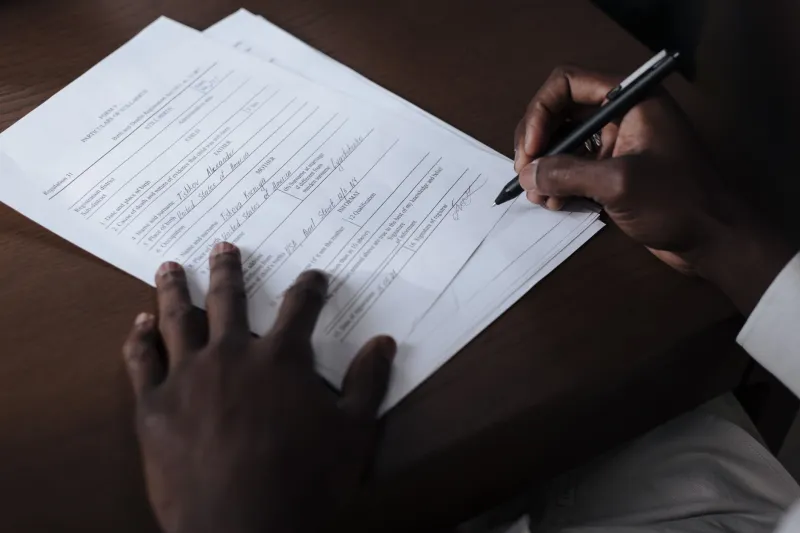
The most basic version looks familiar — it's just a contract, but digital and time-stamped. Platforms like DocuSign and Adobe Sign have been adapted by savvy creators to generate legally binding agreements before any content is produced or shared. Every collaborator, every platform partner, every licensing arrangement gets its own signed record.
But the more sophisticated systems go further.
Some creators are now using blockchain-anchored consent forms — documents that, once signed, are logged on a distributed ledger that can't be altered retroactively. The timestamp is immutable. The agreement is permanent. If someone later claims they had permission to use a clip or an image, the blockchain record either confirms it or it doesn't. There's no gray area, no "I thought it was fine," no conveniently missing email chain.
Services built specifically for the adult industry, like those emerging from creator-focused legal tech startups, are packaging these tools into workflows that don't require a law degree to navigate. Performers fill out a form, both parties sign digitally, and the agreement is hashed and stored in a way that makes tampering effectively impossible.
The Metadata Layer Nobody Talks About
Beyond the formal agreements, creators are getting smarter about what lives inside their content files. Digital watermarking — embedding invisible identifying information into video and image files — has been around for years, but adoption in the adult space is accelerating.
The idea is simple: every piece of content carries a fingerprint. If that content gets ripped, re-uploaded, or modified without permission, the watermark travels with it. Detection software can then scan platforms and flag unauthorized copies automatically, giving creators a starting point for takedown requests that's far more concrete than "I think that might be my video."
Some creators are pairing watermarking with content provenance tracking — essentially a chain of custody record that documents where a file originated, who accessed it, and when it moved between platforms or parties. It's the kind of paper trail that makes a DMCA claim (or a lawsuit) dramatically easier to pursue.
Shifting the Burden of Proof
Here's the part that matters most: these systems aren't just defensive tools. They're a power shift.
In the old model, a creator who claimed their content was stolen or misused had to prove the violation. They had to demonstrate that they owned the content, that they hadn't given permission, and that the person or platform responsible was the one who caused the harm. That's a heavy lift, especially when you're up against a company with lawyers on retainer.
With blockchain consent records and embedded watermarks, the burden moves. If a platform or individual wants to claim they had authorization to use a piece of content, they now need to produce documentation that matches what the creator's system shows. No matching record? No authorization. The creator doesn't have to prove a negative — the absence of consent is built into the architecture.
For performers who've spent years fighting uphill legal battles on limited budgets, that's not a small thing. That's the whole game.
The Community Is Driving Adoption
What's interesting about how this is spreading is that it's not coming from the top down. Major studios and platforms aren't leading the charge — individual creators and small collectives are. Performer-run organizations, Discord communities, and creator forums have become the places where people share templates, compare tools, and troubleshoot implementation.
Creators who've built working systems are publishing guides. Performers who've successfully used digital consent records to pursue takedowns are sharing what worked. It's a knowledge commons built out of hard experience, and it's moving fast.
Some talent agencies are starting to incorporate consent documentation requirements into their standard operating procedures, which is pushing the practice further into the mainstream. If your agency requires blockchain-logged agreements before you work with any partner, that partner has to comply or lose access to the talent. That's leverage.
What Still Needs to Catch Up
None of this is a complete solution. Platforms — especially overseas-hosted sites operating outside US jurisdiction — can still be difficult to hold accountable even with solid documentation. Deepfake detection technology is improving, but so is deepfake generation. And the legal framework in most states still hasn't fully caught up to the reality of what digital consent systems can and can't prove in court.
There's also an access gap. Smaller creators, newer performers, and those without legal or technical support networks are less likely to have implemented these systems. The tools exist, but awareness and adoption aren't uniform.
Still, the direction is clear. The adult creator community in the US is building something that didn't exist five years ago: a documentation culture. A norm that says every interaction should be traceable, every permission should be recorded, and every piece of content should carry proof of where it came from and who authorized what.
That's not just a legal strategy. It's a statement about who gets to control the story — and increasingly, it's the people who made the content in the first place.